Category: Theological Works (Page 3 of 8)

Don’t Blame Augustine: John Gill’s The Cause of God and Truth and the Ancient Roots of Free Grace

Have you ever been told that the “doctrines of grace”—those heavy truths about election and God’s total control over salvation—were just a late invention? Critics often claim that the early church knew nothing of these ideas until St. Augustine came along and ruined the party in the fifth century. This leaves many believers feeling like they are standing on shaky historical ground, wondering if their reformed faith is a historical novelty rather than the “faith once delivered to the saints.” John Gill, the legendary eighteenth-century Baptist scholar, took this challenge personally. In his massive work, The Cause of God and Truth, Gill doesn’t just argue for these doctrines; he goes on a historical and biblical rescue mission to show that sovereign grace has been the heartbeat of the church from the very beginning.

Writing from the perspective of a pastor who holds the Westminster Standards close to my heart, I found Gill’s work to be an essential fortress for the soul. He provides a systematic defense that is as much about the integrity of God’s character as it is about the security of the believer. Here are the most surprising and impactful takeaways from this treasury of truth.

The Early Church Fathers Wore “Calvinist” Glasses Too

One of the most surprising sections of Gill’s work is his deep dive into the writings of the church fathers who lived long before Augustine. He examines the words of early leaders like Clement of Rome and Ignatius to show that they frequently used the language of election and special grace. Gill argues that while these early writers were more focused on fighting off paganism than defining the mechanics of the will, they still clearly spoke of a specific, elect number of people chosen by God.

This is a vital point for the laity to grasp. It means that when we talk about being chosen in Christ before the world began, we aren’t following a “new” theology. Gill shows that even the earliest Christians understood that their calling was not a result of their own wisdom or piety, but was grounded in the prior will and preparation of God.

“All therefore are glorified and magnified, not by themselves or their own works of righteous actions, which they have wrought out, but by his will.”

God Commands as a Sovereign, Not as an Equal

Gill provides a brilliant solution to a common puzzle: if man is unable to repent or believe on his own, why does God command everyone to do so? He makes a sharp distinction between God’s “will of command” and His “will of purpose.” The “will of command” shows us what is our duty and what is pleasing to God. It sets the standard of righteousness. However, the “will of purpose” is what God actually intends to bring to pass.

This reflection is important because it protects the authority of the Lawgiver. Just because we have lost our power to obey through the fall doesn’t mean God has lost His right to command. Gill argues that these commands serve to show us our weakness and leave us without excuse, while the Spirit uses them as a means to draw the elect to Christ.

Foreknowledge is the Result of a Plan, Not a Prediction

A frequent argument against election is that God simply “foresees” who will believe and then chooses them based on that information. Gill turns this on its head. He argues that God’s foreknowledge is not a “guess” or a “conjecture” based on watching human choices from a distance. Instead, God knows what will happen because He has decreed what will happen.

This analysis shifts our focus from human “potential” to divine “purpose.” If God’s knowledge depended on our choices, His mind would be dependent on the creature, which is an impossibility for the Almighty. By grounding foreknowledge in the decree, Gill ensures that the “Cause of God” remains sovereign and that our salvation is settled by an unchangeable will.

“He willed things, and then knew what he willed… God’s decrees are not to be conceived of without his knowledge, nor his knowledge without his decrees.”

The New Birth is a Resurrection, Not a Negotiation

Gill is uncompromising when it comes to the act of conversion. He insists that in the first act of the new birth, the human soul is purely passive. He compares it to the resurrection of a dead body or the creation of the world. Just as a corpse does not “cooperate” with the power that raises it, a sinner “dead in trespasses and sins” does not contribute to the initial spark of spiritual life.

This is a powerful takeaway for anyone struggling with their own spiritual “performance.” It reminds us that our new life is a miracle of almighty power. While we are certainly active in the life of faith that follows—loving God and serving others—the initial “new creation” is a work that belongs entirely to the Holy Spirit.

“This new creation is not an improvement, or a mending of the old principles of nature, but an infusion of new ones, and so is properly styled a creation.”

Why You Should Read This Book

John Gill’s The Cause of God and Truth is a necessary read for anyone who wants to see the broad, historical, and biblical foundation of the reformed faith. It is a masterclass in how to handle difficult Scripture passages without dodging the hard questions. If you have ever felt “bullied” by arguments that suggest your theology is mean-spirited or unhistorical, Gill provides the intellectual and spiritual armor you need to stand firm.

Reading this book will help you see that the “Cause” we represent is not a narrow sectarian opinion, but the very truth of God’s own glory. It will lead you out of the fog of human uncertainty and place your feet on the solid rock of God’s eternal, sovereign purpose.
Getting Your Heart and Your Hymnal in Sync: A Review of John Gill’s Of the Worship of God

Many people today walk into a church service feeling like they are just checking a box. They sing the songs, listen to the sermon, and drop a few dollars in the plate, yet they leave feeling strangely empty. There is a common frustration that religious life has become a series of “bodily exercises” that do not seem to reach the soul. This leaves many wondering if there is something more to worship than just showing up. In his deep and detailed work, Of the Worship of God, the eighteenth-century theologian John Gill argues that true religion is not just a Sunday activity but a “practical” reality that starts deep within the heart.

As a pastor who looks to the Westminster standards for guidance, one finds Gill’s perspective both refreshing and challenging. He reminds us that while the outward forms of worship are necessary, they are entirely useless if the internal fire of grace is not burning. Here are the most impactful takeaways from this massive study on what it truly means to worship.

Worship is a Matter of the “Hidden Part”

Gill begins by making a sharp distinction between internal and external worship. He argues that internal worship is of the greatest importance because God is a Spirit and must be worshipped in spirit and in truth. To Gill, “godliness” is not just a word for being a “good person.” Instead, it is an assemblage of graces like faith, hope, love, and humility, all working together in the soul.

This is a vital point for the modern reader who might be tempted to prioritize the “show” of a church service over the state of their own heart. Gill notes that even the most beautiful singing or the most eloquent prayer is “vain” if the heart is far removed from God. He insists that without a gracious disposition of the mind, a person is technically “ungodly,” even if they are sitting in a pew every week.

“If the heart is not engaged in worship bodily exercise is of little advantage, that being only the form without the power of godliness; yea vain is such worship where the heart is far removed from God.”

Hearing the Word is an Active Sport, Not a Nap

One of the more surprising sections of the book deals with the “public hearing of the word.” Gill does not view the congregation as a passive audience watching a performance. Instead, he describes hearing as a spiritual duty that requires intense preparation and engagement. He warns that the “wicked one” is always present at a sermon, ready to “catch away” the word from a distracted mind.

Gill categorizes hearers into different types, such as “forgetful” ones who are like leaking vessels that let the truth slip through. This reflection is a necessary wake-up call for anyone who has ever found their mind wandering during a sermon. He argues that a person must hear with an “appetite” and must “mix the word with faith” for it to yield any nourishment.

The “Honey Without Wax” Standard for Sincerity

In a chapter on godly sincerity, Gill explains the word “sincere” in a way that provides a powerful visual for the soul. He notes that the term comes from a word meaning “without wax,” like pure honey that hasn’t been diluted or faked. Sincerity in worship means that a person’s principles and practices can bear being held up to the light of the sun to see if there are any defects.

This takeaway is impactful because it moves beyond mere “honesty” and into the realm of integrity before God. Gill argues that a sincere person doesn’t do things to be seen by men but seeks to be approved by God. This perspective helps the reader evaluate their motives: are they serving the Lord for the “praise of men” or out of a “single-hearted” desire for his glory?

“The Latin word sincerus… signifies without wax; as pure honey, which is not mixed with any wax. …such who are truly gracious and sincere, their principles and practices will bear the test of light.”

Spiritual-Mindedness is a Life and Death Issue

Gill takes the idea of “spiritual-mindedness” and moves it out of the clouds and into daily life. He argues that being spiritually-minded is not just a personality trait for the “extra-holy,” but is a literal evidence of life. He contrasts the “carnal mind,” which is bent on the things of the flesh, with the “spiritual mind,” which has its affections set on things above.

This reflection is important because it offers a diagnostic tool for the believer. A spiritually-minded person has “spiritual senses” of seeing, hearing, and even “tasting” that the Lord is gracious. Gill notes that the consequence of this mindset is not just a better mood, but “life and peace.” It serves as a reminder that what a person chooses to “mind” throughout the day actually reveals whose kingdom they belong to.

Why You Should Read This Book

John Gill’s Of the Worship of God is a necessary read for anyone who wants to move beyond a superficial, “checked-box” approach to faith. It is a masterclass in how the internal life of grace should naturally overflow into every public and private duty. For the pastor, it provides a robust framework for leading a congregation. For the layperson, it offers a map for the soul that covers everything from private prayer to how to treat a neighbor or a master.

Reading this book will help the reader realize that “practical religion” is not a burden to be carried, but a “continual feast” to be enjoyed. It pulls the reader out of the “fog” of formal religion and into the sunlight of a life lived in the presence of a holy God.

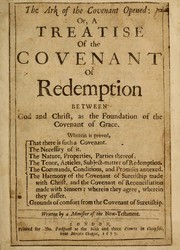
Signed, Sealed, Delivered: Patrick Gillespie’s The Ark of the Covenant Opened and the Eternal Bedrock of Your Peace

Have you ever had one of those days where your standing with God feels as shaky as a house of cards in a windstorm? For many of us, the spiritual life feels like an endless performance review. We wake up wondering if our “contract” with the Almighty is still valid or if a single bad day might trigger a cancellation clause. We treat grace like a fragile glass vase rather than the unshakeable rock it is intended to be.

In his classic work, The Ark of the Covenant Opened, 17th-century pastor Patrick Gillespie invites us to look behind the curtain of time into what theologians call the “Covenant of Redemption.” This isn’t just dry theory; it is the bedrock of our peace. Gillespie argues that our salvation isn’t a reaction to our choices, but the result of an eternal, iron-clad agreement between God the Father and God the Son.

As a pastor who holds to the Westminster Standards, I find Gillespie’s deep dive into this eternal arrangement to be exactly what our anxious age requires. Here are the most impactful takeaways from this massive treasury of truth.

The Foundation is Built on Christ’s Performance, Not Yours

Gillespie points out that the “Covenant of Grace” we enjoy today is like a beautiful skyscraper sitting on a foundation deep underground. He explains that this agreement “springs out of the Covenant made with Christ” before the world began. In this eternal pact, the Father and Son “plotted, consulted, and concluded” the business of our rescue long before we were even born.

This perspective shifts the focus from our fluctuating feelings to the steady, eternal will of God. Your security is settled because it rests on God’s deal with His Son, not on your ability to keep a promise.

“As the Covenant of Grace hath its rise from God only, and from Grace; so ’tis founded and bottomed upon nothing in us, but upon God’s Covenant with Christ.”

Jesus is a “Cautioner” Who Settles the Debt in Full

Gillespie uses a legal term that is incredibly powerful for a guilty conscience: the Surety, or “Cautioner.” Think of it as a co-signer on a loan you could never possibly repay. He explains that Jesus did not merely offer to help us pay our debt of sin; He legally stepped into our shoes in the courtroom of God. By becoming our Surety, Christ took on our “Law-place,” meaning your debt became His entire responsibility.

In divine justice, the Law cannot demand payment from both the Surety and the original debtor. Once Christ paid the price on the cross, the believer was legally cleared. Our debt isn’t just ignored; it is settled in full by a party who is “mighty to save.”

A Commissioned Ambassador, Not a Rogue Volunteer

One of Gillespie’s most insightful points is that Jesus did not “intrude” into the office of Savior on a whim. He was “called,” “designed,” and “sealed” for this specific task by the Father. Gillespie argues that this official commission gives the work of Jesus an unshakeable weight. Jesus is the “Messenger of the Covenant,” a high-level Ambassador sent with an official report from the Court of Heaven.

This matters because it proves the Father is just as invested in our rescue as the Son is. When we hear the Gospel, we aren’t hearing a sales pitch; we are receiving a formal report from a Messenger who was “fore-ordained before the foundation of the world.”

Even the Angels are Getting a Boost

In a surprising twist, Gillespie suggests that even the “good” Angels who never sinned benefit from Christ’s work. While they don’t need “redemption” from sin, they find their stability and “confirmation” in Christ.

This reminds us that Jesus is the center of the entire universe, not just a private “life coach” for humans. He is the “Head of all Principality and Power.” When we join the Covenant of Grace, we are joining a cosmic community where even the Angels look on with wonder, learning more about God’s wisdom through His dealings with us.

Christ is the Jewel, Not Just the Setting

Perhaps Gillespie’s most profound takeaway is the claim that Christ is called “the Covenant itself.” He is the summary and the “full price of the whole bargain.” Gillespie suggests that we often seek the benefits of the Covenant—like peace or pardon—while forgetting the Person who embodies them.

Christ is the “precious stone” in the ring, and all other blessings are merely the garnish. Because He is “all the Covenant,” having Christ means you have the entire contract, including every clause, every promise, and every future blessing.

“Christ is the jewel and precious stone of that ring; he himself is the chief thing that is in the Covenant.”


Why You Should Read This Book

In an era where everything feels temporary, Patrick Gillespie’s The Ark of the Covenant Opened provides an anchor that reaches back into eternity. This book is a masterclass in what theologians call “objective security.” It leads the reader out of the labyrinth of self-examination and into the sunlight of God’s settled purpose.

Gillespie helps the reader realize that they are not just a “saved sinner” trying to keep their head above water. Instead, they are a “Legatee”—someone who has been left a massive inheritance in a Will (the New Testament) that was signed in blood and proven in the highest court of the universe. Reading this book will help you stop treating your salvation like a trial period and start treating it like the settled legacy it is.

Final Thought to Ponder: If your salvation was a contract signed between the Father and the Son before time began, what possible mistake could you make today that is big enough to break it?

The Truth, Inspiration, and Authority of Scripture by Archibald Alexander

The Truth, Inspiration, and Authority of Scripture by Archibald Alexander, published by Lexham Press, is a profound exploration of the foundational doctrines concerning the nature of Scripture. Alexander, a leading figure in the Old Princeton Seminary, presents a detailed exposition on the reliability, divine inspiration, and authoritative role of the Bible in the life of the church and individual believers. The book is structured to provide a logical and theological defense of the Bible as the Word of God, capable of commanding belief and obedience.

In the opening sections, Alexander systematically addresses the truth of Scripture, arguing for its consistency and historical reliability. He counters skepticism by drawing on both internal and external evidences that affirm the Bible’s truthfulness. This is followed by a thorough treatment of the doctrine of inspiration, where Alexander elaborates on the Holy Spirit’s role in guiding the human authors of Scripture, ensuring that the Bible is both fully divine and genuinely human in its composition. The final section of the book discusses the authority of Scripture, emphasizing its sufficiency and finality as the rule of faith and life, undergirded by its divine origin.

Throughout the book, Alexander’s primary concern is to uphold the authority of the Bible against modernist critiques and to equip Christians with a robust understanding of why the Scriptures can be trusted as the ultimate source of divine revelation. He engages with various objections to biblical authority and inspiration, providing readers with well-reasoned responses that draw from historical, theological, and philosophical perspectives.

When comparing The Truth, Inspiration, and Authority of Scripture to other works on the same topic, such as B.B. Warfield’s The Inspiration and Authority of the Bible and John Murray’s The Infallible Word, Alexander’s work stands out for its foundational approach. Warfield and Murray, both of whom were influenced by Alexander, delve deeper into the nuances of biblical inspiration and inerrancy, often engaging with more complex theological and philosophical issues. In contrast, Alexander’s work provides a more accessible introduction to the topics, making it a valuable resource for those new to the study of Scripture’s nature.

While Warfield and Murray build upon the principles laid out by Alexander, they do so in a way that assumes a level of prior knowledge that Alexander himself provides. Thus, Alexander’s work serves as an excellent starting point for readers who wish to engage with the more detailed and technical discussions found in Warfield and Murray’s writings. Additionally, Alexander’s historical context allows him to address challenges to biblical authority that were emerging in his time, which continue to resonate in today’s debates over the nature of Scripture.

The content of The Truth, Inspiration, and Authority of Scripture is particularly useful for Christians seeking to deepen their understanding of why the Bible is central to their faith. Alexander’s logical and scriptural arguments equip readers with the tools necessary to defend the Bible’s divine origin and its role as the ultimate authority in matters of faith and practice. His clear exposition of the doctrine of inspiration helps believers appreciate the unique way in which God has communicated His will through human authors, ensuring that the Scriptures are both trustworthy and relevant.

The cover and binding of The Truth, Inspiration, and Authority of Scripture are well-suited to its content. The design is simple and elegant, reflecting the timeless nature of the book’s subject matter. The cover features a clean layout with a focus on clarity, which complements the book’s accessible writing style. The binding is durable, ensuring that the book can withstand repeated readings and study sessions. These features make the book a valuable addition to any personal or church library.

Overall, The Truth, Inspiration, and Authority of Scripture by Archibald Alexander is an essential resource for anyone seeking to understand and defend the Bible’s role in the Christian faith. Alexander’s clear and systematic approach, combined with his deep reverence for Scripture, makes this book a valuable tool for pastors, laymen, and scholars alike. Whether used for personal study, teaching, or group discussion, The Truth, Inspiration, and Authority of Scripture offers a comprehensive and accessible guide to one of the most important doctrines of the Christian faith.


“I received The Truth, Inspiration, and Authority of Scripture by Lexham Press for the purpose of an unbiased review. I have not received any compensation for providing a positive review. My opinions are entirely my own and reflect my sincere evaluation of the book.”

Book Details:

  • Title: The Truth, Inspiration, and Authority of Scripture
  • Author: Archibald Alexander
  • Publisher: Lexham Press

On Islam by Abraham Kuyper

On Islam by Abraham Kuyper, published by Lexham Press, is a work that offers a Christian perspective on Islam, providing readers with an analysis of Islamic theology, history, and its socio-political implications. Kuyper, a prominent Dutch theologian and politician, approaches Islam not merely as a distant religious system but as a significant global force that shapes the lives of millions. His examination is rooted in a Christian worldview, aiming to understand Islam in its own terms while also critiquing it through the lens of Reformed theology.

The book is divided into several sections, each dealing with different aspects of Islam. Kuyper begins with an exploration of Islamic theology, focusing on the central tenets of the faith such as the concept of Allah, the role of Muhammad as the final prophet, and the authority of the Qur’an. He then moves on to discuss the historical development of Islam, tracing its expansion from the Arabian Peninsula to various parts of the world. Kuyper is particularly interested in how Islamic beliefs have influenced the cultures and political structures of the regions where Islam has gained a foothold.

Kuyper’s work also addresses the challenges that Islam poses to Christianity and Western society. He engages with the ways in which Islamic law (Sharia) and worldview conflict with Christian doctrines and the principles of Western democracy. Throughout the book, Kuyper emphasizes the need for Christians to understand Islam deeply, not only to engage with Muslims but also to respond to the ideological and theological challenges that Islam presents.

Kuyper’s deep understanding of both Christian theology and the socio-political dynamics of his time positions him as a credible and insightful commentator on Islam. His background as a theologian is evident in his careful analysis of Islamic doctrine, while his experience as a politician informs his understanding of the broader implications of Islam in the global context. Kuyper’s ability to bridge the gap between theology and public life makes his work particularly valuable for readers who are interested in the intersection of faith and culture.

The content of On Islam is rich with insights that help readers understand the complexities of Islam and its place in the world. Kuyper’s approach is both analytical and practical, as he not only explains the core beliefs of Islam but also considers how these beliefs manifest in the lives of Muslims and the societies they inhabit. This makes the book particularly useful for Christians who seek to engage with Muslims thoughtfully and respectfully.

Kuyper’s use of the Bible is strategic and pointed. He frequently contrasts Islamic teachings with Christian doctrine, highlighting key differences such as the nature of God, the person and work of Jesus Christ, and the role of Scripture. For instance, Kuyper emphasizes the Christian understanding of God’s triune nature in contrast to the strict monotheism of Islam.

The cover and binding of On Islam are reflective of the book’s academic yet accessible nature. The design is simple and elegant, with a focus on clarity and readability. The cover features a subtle yet striking color scheme, which gives the book a professional appearance suitable for both personal libraries and academic settings. The binding is sturdy, ensuring that the book will hold up to repeated readings and study sessions.

When comparing On Islam to other Christian works on Islam, such as James R. White’s What Every Christian Needs to Know About the Qur’an and Nabeel Qureshi’s No God But One: Allah or Jesus?, Kuyper’s book stands out for its historical depth and theological rigor. While White and Qureshi provide valuable insights into the Qur’an and the differences between Islam and Christianity, Kuyper offers a more comprehensive view that includes not only theological analysis but also historical and cultural perspectives.

White’s work, for example, focuses primarily on a detailed examination of Islamic texts, aiming to equip Christians with knowledge about the Qur’an and its teachings. Qureshi, on the other hand, offers a personal narrative intertwined with theological reflection, providing a more accessible and emotionally engaging approach. Kuyper’s On Islam, in contrast, provides a broader scope that situates Islam within the larger context of world history and global politics, making it a valuable resource for those looking to understand the religion’s impact on a macro level.

Overall, On Islam by Abraham Kuyper is a valuable resource for Christians seeking to engage with Islam thoughtfully and biblically. Kuyper’s blend of theological analysis, historical insight, and practical application makes this book an excellent tool for pastors, laymen, and scholars alike.


“I received On Islam by Lexham Press for the purpose of an unbiased review. I have not received any compensation for providing a positive review. My opinions are entirely my own and reflect my sincere evaluation of the book.”

Book Details:

  • Title: On Islam
  • Author: Abraham Kuyper
  • Publisher: Lexham Press

Reformed Dogmatics: A System of Christian Theology by Geerhardus Vos; Edited by Richard B. Gaffin Jr.

Reformed Dogmatics: A System of Christian Theology by Geerhardus Vos, edited by Richard B. Gaffin Jr., is a significant contribution to Reformed theology, offering a comprehensive and systematic exploration of Christian doctrine. The book is structured into five volumes, covering the major loci of Reformed dogmatics: theology proper, anthropology, Christology, soteriology, and ecclesiology. Vos approaches each topic with a meticulous attention to biblical exegesis, historical theology, and systematic coherence, making this work an essential resource for understanding the Reformed theological tradition.

The first volume begins with the doctrine of God, where Vos carefully examines the nature and attributes of God, the Trinity, and the works of God in creation and providence. He then moves on to anthropology, addressing the creation of man, the fall, and the nature of sin. Vos’s treatment of Christology is particularly noteworthy, as he expounds on the person and work of Christ with clarity and depth, rooted in a robust understanding of the covenantal framework of Scripture. The volumes on soteriology and ecclesiology further develop these themes, exploring the application of redemption, the nature of the church, and the sacraments.

Throughout Reformed Dogmatics, Vos consistently emphasizes the centrality of Scripture as the foundation for theological reflection. His method is deeply exegetical, engaging with the biblical text in a way that illuminates the theological truths it contains. Vos also interacts with the broader Reformed tradition, drawing on the insights of theologians like John Calvin, Herman Bavinck, and the Westminster Divines. This historical engagement, combined with his own theological acumen, makes Vos’s work both a continuation of and a significant contribution to the Reformed dogmatic tradition.

Author’s Credentials

Geerhardus Vos (1862-1949) was a towering figure in Reformed theology, often referred to as the “father of Reformed biblical theology.” He was a professor at Princeton Theological Seminary, where he taught for over 30 years. Vos’s work is marked by his deep commitment to the authority of Scripture and his ability to synthesize biblical theology with systematic theology. His academic background, including studies in the Netherlands and at Princeton, provided him with a rich theological foundation, which he utilized in his writings and teaching. Richard B. Gaffin Jr., who edited this edition, is also a respected Reformed theologian, known for his work on Pauline theology and his contributions to the understanding of Reformed theology in the modern context.

Content and Application

Vos’s Reformed Dogmatics is invaluable for understanding the depth and breadth of Reformed theology. His treatment of each doctrine is deeply rooted in Scripture, providing readers with a clear understanding of how theological concepts are derived from and supported by the Bible. For instance, his discussion on the attributes of God is not only a theological exercise but also a guide for how believers should understand and relate to their Creator. Similarly, his treatment of Christology provides a foundation for understanding the work of Christ as central to the Christian faith, emphasizing the necessity of a proper understanding of Christ’s person and work for the life of the believer.

The book is also practical in its application. For pastors, Reformed Dogmatics serves as a rich resource for sermon preparation, theological education, and pastoral counseling. Vos’s detailed exposition of key doctrines offers pastors a deep well from which to draw when teaching their congregations. The theological clarity and biblical fidelity of Vos’s work make it a reliable guide for pastoral ministry, ensuring that the teaching and preaching in the church are grounded in sound doctrine.

For laypeople, while the book is academically rigorous, it remains accessible to those with a serious interest in theology. Vos’s clear writing and systematic approach make complex theological concepts understandable, providing lay readers with the tools to deepen their understanding of the faith. This makes the book suitable for personal study, group study, or as a reference for those seeking to understand the core tenets of Reformed theology.

Book Cover and Binding

The book’s cover and binding reflect the seriousness and quality of its content. The design is both simple and elegant, with a focus on readability and durability. This makes the book not only a valuable intellectual resource but also a physically enduring one that can withstand regular use. The high-quality production of the book is in line with its status as a significant work in Reformed theology.

Use with Other Works

Reformed Dogmatics can be effectively used alongside other theological works, particularly those within the Reformed tradition. It complements Herman Bavinck’s Reformed Dogmatics and Louis Berkhof’s Systematic Theology, offering a more exegetically focused approach that enriches the understanding gained from these other works. Additionally, it serves as a valuable companion to biblical commentaries and works on biblical theology, providing a systematic framework for understanding the doctrines expounded in Scripture.

Framework Analysis

The framework of Reformed Dogmatics is meticulously organized, guiding readers through the major doctrines of the Christian faith in a logical and coherent manner. Each volume builds upon the previous one, ensuring that readers gain a comprehensive understanding of Reformed theology as they progress through the work. Vos’s integration of biblical exegesis with systematic theology ensures that the doctrines discussed are not abstract concepts but living truths that have a direct impact on the life of the believer and the church. This makes Reformed Dogmatics not just a theological textbook but a guide for living out the faith in accordance with the teachings of Scripture.


“I received Reformed Dogmatics: A System of Christian Theology by Lexham Press for the purpose of an unbiased review. I have not received any compensation for providing a positive review. My opinions are entirely my own and reflect my sincere evaluation of the book.”

Book Details:

  • Title: Reformed Dogmatics: A System of Christian Theology
  • Author: Geerhardus Vos
  • Publisher: Lexham Press

Reformed Covenant Theology: A Systematic Introduction by Harrison Perkins

Reformed Covenant Theology: A Systematic Introduction by Harrison Perkins provides a thorough exploration of the covenantal framework that underpins Reformed theology. Perkins systematically presents the biblical covenants—covenant of works, covenant of grace, and covenant of redemption—and articulates their role in the unfolding of redemptive history. He argues that understanding these covenants is crucial to grasping the narrative of Scripture and the nature of God’s relationship with humanity. Perkins delves into the theological implications of covenant theology, emphasizing its role in understanding salvation, the continuity between the Old and New Testaments, and the unity of God’s people across time.

In addition to his biblical exposition, Perkins engages with historical and contemporary theological discussions. He traces the development of covenant theology from its roots in the Reformation, particularly focusing on the contributions of theologians like John Calvin, Herman Witsius, and the Westminster Divines. By doing so, Perkins situates his work within the broader Reformed tradition, highlighting both the continuity and diversity of thought within this theological framework. He also addresses modern critiques and alternative views, providing a robust defense of covenant theology as not only biblically sound but also pastorally effective.

The book concludes by applying covenant theology to various aspects of Christian life and ministry. Perkins discusses the practical outworking of covenant theology in areas such as preaching, sacraments, and church governance. He argues that a covenantal understanding of Scripture provides a coherent and comprehensive foundation for Christian living and ministry, offering both theological depth and practical guidance. This final section underscores the relevance of covenant theology for both pastors and laypeople, making the case that it is not merely an academic exercise but a vital tool for understanding and applying God’s Word.

Author’s Credentials

Harrison Perkins is a well-regarded theologian within the Reformed tradition. He holds a Ph.D. from Queen’s University Belfast, where he studied under notable Reformed scholars. Perkins has served as a pastor and lecturer, bringing a blend of academic rigor and pastoral sensitivity to his work. His deep engagement with both the historical development of Reformed theology and its contemporary application makes him a credible voice on the subject. Perkins’ commitment to the Reformed confessions and his extensive research into covenant theology are evident throughout the book, marking him as a reliable guide for those seeking to understand this complex and vital doctrine.

Comparison to Similar Works

When comparing Reformed Covenant Theology: A Systematic Introduction to other similar works, such as The Christ of the Covenants by O. Palmer Robertson and Covenant Theology: Biblical, Theological, and Historical Perspectives edited by Guy Prentiss Waters, J. Nicholas Reid, and John R. Muether, Perkins’ book stands out for its systematic approach and accessibility. While Robertson’s work provides a solid biblical-theological overview of the covenants, Perkins offers a more structured and detailed exploration, particularly in his engagement with historical and contemporary theological debates. The multi-authored volume edited by Waters, Reid, and Muether provides a broad survey of covenant theology from various perspectives, but Perkins’ single-author approach allows for a more unified and coherent presentation of the subject.

Content and Application

The content of Perkins’ book is deeply rooted in Scripture, with extensive use of biblical texts to support his arguments. He consistently grounds his theological assertions in the Bible, demonstrating how the covenantal framework is woven throughout the entire narrative of Scripture. This use of the Bible is not merely proof-texting but involves careful exegesis and theological reflection, making the book both academically rigorous and practically useful. Perkins’ discussion of the covenants helps readers understand God’s plan of redemption and its implications for their own lives, offering a framework that is both doctrinally sound and spiritually edifying.

For pastors, Reformed Covenant Theology is an invaluable resource. It provides a clear and comprehensive understanding of covenant theology, which is essential for preaching and teaching. Perkins’ insights into the practical implications of covenant theology for church life and ministry are particularly helpful, offering guidance on how to apply these doctrines in pastoral care, worship, and church governance. The book can serve as a reference for sermon preparation and theological education within the church, helping pastors to equip their congregations with a solid understanding of God’s covenantal dealings with His people.

For laypeople, the book is accessible and informative. Although it is scholarly, Perkins writes in a way that is understandable to those without formal theological training. The book can be used for personal study or in group settings, such as Bible studies or Sunday school classes, to deepen one’s understanding of Scripture and the Christian faith. The practical applications offered by Perkins make the book relevant to everyday Christian living, providing readers with a framework for interpreting the Bible and understanding their relationship with God.

Book Cover and Binding

The book’s cover and binding are of high quality, reflecting the importance of its content. The cover design is simple yet elegant, with a focus on clarity and readability. The binding is durable, ensuring that the book will withstand frequent use. This attention to physical quality complements the book’s intellectual and spiritual substance, making it a valuable addition to any theological library.

Framework Analysis

The framework of Reformed Covenant Theology is methodical and well-organized, making it easy for readers to follow Perkins’ arguments. Each chapter builds on the previous ones, providing a logical progression through the key elements of covenant theology. This structure allows readers to see how the covenants are interconnected and how they apply to both individual believers and the church as a whole. Perkins’ emphasis on the practical implications of covenant theology ensures that the book is not just a theoretical exercise but a guide for living out one’s faith in accordance with God’s covenantal purposes.


“I received Reformed Covenant Theology: A Systematic Introduction by Lexham Press for the purpose of an unbiased review. I have not received any compensation for providing a positive review. My opinions are entirely my own and reflect my sincere evaluation of the book.”

Book Details:

  • Title: Reformed Covenant Theology: A Systematic Introduction
  • Author: Harrison Perkins
  • Publisher: Lexham Press

John Owen’s Complete Works (Volume 28: The Church, the Scriptures, and the Sacraments)

John Owen’s Complete Works (Volume 28: The Church, the Scriptures, and the Sacraments) is a comprehensive and erudite study of some of the most basic tenets of Reformed church polity and theology of the sacraments. This book, which is a part of Crossway’s series on Owen’s collected works, offers the readers a detailed understanding of the theological and practical issues related to the nature of the church, the authority of the scripture, and the right dispensation of the sacraments. Owen’s detailed explanation and logical reasoning are indicative of his adherence to biblical and confessional approach to these vital truths.

The volume is divided into three main parts, each of which is devoted to a particular aspect of Owen’s theological production. The first section deals with the characteristics and signs of the true church. Here, Owen carefully outlines the scriptural understanding of the church and then shows how various heresies have developed over the course of history. He stresses the need for discipline in the church, the sanctity of worship, and the need to maintain biblical standards in the church’s operations. The second part is devoted to the doctrine of Scripture, in which Owen expounds the inerrancy and sufficiency of the Holy Scripture. He also discusses the problems arising from various heresies and emphasizes the sufficiency of the Scripture as the only standard of faith and practice. The last part deals with the sacraments of baptism and the Lord’s supper, explaining the meaning of these sacraments, how they should be administered, and the blessings that believers receive when these sacraments are rightly performed.

John Owen is considered one of the greatest Puritan theologians; he was a writer and a pastor who left a great legacy in the Reformed tradition. Owen was born in 1616 and he was a chaplain in the English Civil War, a preacher to the Parliament and the Vice-Chancellor of Oxford University. He has written extensively on soteriology, ecclesiology, pneumatology and many others. Owen’s academic training and his pastoral experience give him a solid ground to speak and write as an expert in theology especially in the reformed tradition.

The material of this volume is not only theologically dense but also highly applicable to the existence of the church. Owen’s analysis of the church’s nature and marks gives a clear and scriptural understanding of what it means to be part of the true church. His emphasis on the inerrancy of the Bible is a timely word to the church today where many are being enticed to compromise the Word of God. In addition, Owen’s handling of the sacraments reveals their significance in the life of the believer, not as a mere formality, but as a way in which God communicates with and sustains His people.

The use of the Bible in the book is perfect, as Owen supports all his statements with references to the Scripture. He often uses biblical references to back his arguments and spends a lot of time explaining the implications of certain passages. For this reason, the book is a rich source of information for those who want to study these doctrines from the Bible. Owen’s focus on the text of Scripture guarantees that his conclusions are not rooted in human reasoning but in the Word of God.

In particular, this volume is a useful resource for pastors. It offers a strong theological framework for comprehending the character of the church, the place of the Bible, and the importance of the sacraments. Owen’s comprehensive approach to these subjects can help pastors in catechizing their people, sermon preparation, and answering theological issues that may come up in ministry. The book’s focus on the purity of worship and the right handling of the sacraments is especially helpful for pastors who want to ensure the sanctity of the church’s activities.

It will also be of great benefit to laymen. Despite the fact that the language and the concepts used in the book may be rather complex at times, the book is filled with valuable information that can help a person gain a better understanding of the church and the sacraments. For those who are willing to devote time and effort to reading this volume, it can greatly enhance their spiritual lives and help them better understand the church’s part in God’s plan of salvation.

The physical quality of the book is good, the binding is strong and the cover design is appropriate for the subject matter of the book. The volume is a part of a series and is designed to fit the other volumes in the series and therefore is a good addition to any theological library. The structure is logical and the text is divided into sections with headings and subheadings to facilitate the understanding of the material.

When read alongside other Reformed documents like Calvin’s Institutes or the Westminster Standards, Owen’s volume can be helpful for getting a broader view of Reformed ecclesiology and sacramentology. The depth of Owen’s analysis is helpful in supplementing the general surveys offered by other theologians, and this book is a useful addition to the library of anyone studying these doctrines in detail.

Therefore, John Owen’s Complete Works (Volume 28: The Church, the Scriptures, and the Sacraments) is a valuable tool for anyone studying Reformed theology. The extensive focus on the church, Scripture, and the sacraments, along with Owen’s dedication to the authority of Scripture, makes it a work that remains relevant for the church today.

I would like to state that I was provided with John Owen’s Complete Works (Volume 28: The Church, the Scriptures, and the Sacraments) by Crossway for the purpose of an honest review and I have not been paid for this review.

In conclusion, John Owen’s Complete Works (Volume 28: The Church, the Scriptures, and the Sacraments) is an essential resource for anyone interested in Reformed theology. Its detailed treatment of the church, Scripture, and the sacraments, combined with Owen’s commitment to biblical authority, makes it a timeless work that continues to speak to the church today.


“I received John Owen’s Complete Works (Volume 28: The Church, the Scriptures, and the Sacraments) by Crossway for the purpose of an unbiased review. I have not received any compensation for providing a positive review. My opinions are entirely my own and reflect my sincere evaluation of the book.”

Book Details:

Publisher: Crossway

Title: John Owen’s Complete Works (Volume 28: The Church, the Scriptures, and the Sacraments)

Author: John Owen

Revival by Martyn Lloyd-Jones

Revival by Martyn Lloyd-Jones is a classic work that seeks to explain what revival is, why it is needed, and what characteristics it possesses in the context of the Christian church. Lloyd-Jones, using the scriptures and historical references, defines revival as a sovereign act of God that results in the Holy Spirit’s intervention that transforms the church and society. He stresses that revival is not a series of meetings but a powerful and lasting move of God that brings the church back to its biblical glory. The book is a plea for serious prayer, reliance on the Holy Spirit, and commitment to expository preaching as the ways in which God might be pleased to send revival.

In this book, Lloyd-Jones looks at the history of revivals and the biblical basis for them as well as the implications of revivals. He also points out the major revivals in the history of the church like the Great Awakening, the Welsh Revival and others to show how God has been working in the past and what the present day church should learn from it. His is a historical and theological study, proving that true revival is always characterized by the affirmation of the Word of God, the consciousness of sin, and the desire for sanctity. He also cautions against the ‘spurious’ revivals that may stir the people for a while but do not bring forth the fruits of genuine revival.

The last major theme of the book is the preaching of the word in revival. Lloyd-Jones, a preacher himself, affirms that God has decided to use preaching as the main tool in revival. He emphatically states that true revival preaching is marked by the proclamation of the truth, the exaltation of the glory of God, and the call to sinners to repent and believe the gospel. He condemns modern trends to dilute the message in order to reach more people, and calls for the revival of the anointed preaching that has characterized the great awakenings.

Martyn Lloyd-Jones was a well-known Welsh minister and a medical doctor who was the pastor of Westminster Chapel in London for almost three decades. He was a man of strong Reformed beliefs, an eloquent speaker, and a man who was very concerned about the spiritual state of the church. Lloyd-Jones was an important figure in the Reformed movement of the twentieth century and continues to be so through his books and tapes. He is a pastor and a theologian, and his ideas about revival are based on his research and his practice as a minister.

In contrast to other books on revival, which include Jonathan Edwards’ A Narrative of Surprising Conversions or Richard Owen Roberts’ Revival, Lloyd-Jones’ Revival is unique in its focus on the need for biblical preaching and the role of the Holy Spirit. Edwards gives a more elaborate description of the various revivals and their impact while Roberts gives a historical background of revival, Lloyd-Jones on the other hand dwells more on the theological and practical aspects of revival which makes it more suitable for practitioners.

In Revival, Lloyd-Jones does not make any new arguments but supports his points with the Bible, which makes the content of the book scriptural. He often uses Old and New Testament verses to show that revival is a continuous process in the history of redemption. His exposition of Scripture is comprehensive and reflective, offering the reader a solid biblical foundation for the concept of revival. This solid biblical basis makes the book useful not only as a theological work but also as a practical guide for individual reading.

To pastors, Revival is a word of comfort and a word of admonition. Lloyd-Jones challenges ministers to preach at a higher level, and to depend more on the Spirit than on techniques. He also gives advice on how to create the spirit of revival in the church and the ways that include prayer, repentance, and the word of God. This book will be a source of inspiration for pastors to see what the church can become when it is awake to God.

The laymen will also benefit from Revival because the book explains what true revival is all about in simple language. Lloyd-Jones’ writing is clear and free from complex theological jargon and the examples he uses are easy to understand and apply to everyday life. The focus on personal sanctification, prayer, and love for the Word of God will be appreciated by those who long for the true revival in their own hearts and churches.

The material of the book and its cover and binding are also of good quality, which is appropriate for the subject matter of the book. The book is well organized with headings and subheadings that help the reader follow along easily. The binding is strong and this means that the book will be able to handle frequent use in individual or group study.

Revival can be used in conjunction with other works on the subject such as Edwards or Roberts. Its concentration on the theological and pastoral aspects of revival is a good addition to the historical and experiential approaches of other authors. Altogether, these works offer a clear and complete vision of revival that is both academically sound and spiritually enriching.

In conclusion, Martyn Lloyd-Jones’ Revival is a must-read for anyone who wants to gain insight into the nature of revival. Due to its historical analysis, scriptural interpretation, and application, this book should be on the shelves of pastors, theologians, and ordinary believers.

“I got Revival by Crossway for free to review and I am not paid to give a positive review. This is my honest opinion of the book.”

Book Details:

Title: Revival

Author: Martyn Lloyd-Jones

Publisher: Crossway

Reformed Covenant Theology by Harrison Perkins

Harrison Perkins’ Reformed Covenant Theology is a comprehensive exploration of the development, nuances, and practical implications of covenant theology within the Reformed tradition. This book delves into the intricate theological framework that undergirds the covenantal relationship between God and humanity, tracing its roots from the early church fathers through the Reformation and into contemporary Reformed thought. Perkins provides a thorough examination of the biblical covenants, emphasizing their continuity and fulfillment in Jesus Christ, and elucidates how this theological paradigm shapes the Christian life and practice.

One of the primary areas Perkins looks at is the historical background to covenant theology. He painstakingly lays out the historical development of covenant theology from the apostolic age to Augustine, Calvin, and the Westminster Assembly. By providing a historical context, Perkins highlights the enduring significance of covenant theology within the Reformed tradition. This historical overview not only grounds the reader in the rich heritage of covenant theology but also underscores its relevance for contemporary theological discourse.

Secondly, Perkins provides an elaborate explanation of the biblical covenants, especially the covenant of works, the covenant of grace, and the covenant of redemption. He expounds how each covenant depicts God’s plan of salvation and his faithfulness to his people. Perkins’ handling of the covenant of grace is quite helpful as he expounds on the different administrations of the covenant in the course of salvation history, with the new covenant that Christ inaugurated. He has a sound exegetical method and his theological analysis is always based on the biblical text.

Thirdly, the book focuses on the application of covenant theology in the Christian life and church practice. In this chapter Perkins shows how covenant theology is relevant to the Reformed worship, sacraments and ethic. He claims that knowledge of the covenantal framework of Scripture improves one’s comprehension of the sacraments as the channels of grace and reminds of the necessity of living a life in accordance with the covenantal responsibilities set forth in Scripture. This practical application runs throughout the book, and the author explains the most profound theological concepts in a way that can be applied in the life of a Christian.

Thus, Harrison Perkins is well-qualified to write on this subject. Being a pastor and a scholar, he has a profound knowledge of Reformed theology, which makes him an ideal author to cover both the theoretical and practical sides of covenant theology. Perkins has a masters in theology and a doctorate in systematic theology and has written many articles on Reformed theology and therefore can be considered an expert in the area.

When compared to other works on covenant theology, such as Meredith Kline’s Kingdom Prologue or O. Palmer Robertson’s The Christ of the Covenants, Perkins’ book stands out for its balance between historical development, biblical exegesis, and practical application. While Kline provides a more technical and scholarly approach, and Robertson offers a comprehensive biblical overview, Perkins integrates these elements into a cohesive narrative that is both informative and applicable to the reader’s faith and practice.

Perkins’ use of the Bible is exemplary. He consistently grounds his arguments in Scripture, providing extensive biblical references and thoughtful interpretations. His approach ensures that his conclusions are firmly rooted in the biblical text, making his theological assertions credible and compelling.

Perkins’ use of the Bible is very helpful. He always uses scriptural support to back up his statements, and offers numerous scriptural citations and analysis. This way, he makes sure that his conclusions are grounded in the text of the Bible, thus making his theological propositions believable.

In particular, pastors will find this book extremely helpful. Its comprehensive coverage of covenant theology is useful in preaching and teaching. Perkins’ historical and exegetical observations can be useful for sermon preparation and assist pastors in presenting the depth of covenant theology to the church. Also, his practical applications are helpful for pastoral ministry, especially in worship and sacrament.

The laypeople will also find this book easy to understand and informative. Perkins is a fantastic writer and his ideas are easy to follow and comprehend even for those who do not have a theological background. His focus on application makes it possible for the readers to easily apply the lessons learned from the book to their own faith and practice.

The exterior of Reformed Covenant Theology is also well done with a professional looking cover and binding that should hold up well to frequent usage. The structure is logical and well thought out with headings and subheadings, margins for notes, and an index, which makes it easy to use and learn from.

This work can be used alongside other theological resources. Its depth and clarity make it a useful supplement to more condensed doctrinal statements like the Westminster Standards, while its practicality makes it a good companion to devotional and pastoral works. Thus, by reading Perkins’ work in conjunction with other works on covenant theology, the reader is provided with a balanced and thorough understanding of this important facet of Reformed theology.

Thus, Reformed Covenant Theology by Harrison Perkins is a valuable tool for anyone who wants to gain a better understanding of the biblical covenants and their relevance to the Christian faith. Due to its historical development, biblical interpretation, and application, this book is a worthy addition to the collections of pastors, scholars, and lay readers.

I received Reformed Covenant Theology from Lexham Press for the purpose of an unbiased review. I have not received any compensation for providing a positive review. My opinions are entirely my own and reflect my sincere evaluation of the book.

Book Details:

Title: Reformed Covenant Theology
Author: Harrison Perkins
Publisher: Lexham Press

« Older posts Newer posts »

© 2026 The Puritan Reader

Theme by Anders NorenUp ↑