Author: The Puritan Reader (Page 5 of 18)

No Secret Decoder Ring Required: William Goode’s The Divine Rule of Faith and Practice and the End of Traditionalist Tug-of-War

Have you ever felt like you needed a PhD in ancient history just to be sure about what you believe? It is a relatable frustration. We are often told by various experts that the Bible is too deep, too obscure, or too “incomplete” to be understood on its own. They suggest we need a second rule—a “Traditional” guide—to unlock the secret meaning of the text. In his massive and brilliant work, The Divine Rule of Faith and Practice, the 19th-century rector William Goode steps into this confusion to remind us that God didn’t give us a puzzle; He gave us a Revelation.

As a pastor who stands firmly on the Westminster Confession, I find Goode’s defense of the Bible’s sufficiency to be the ultimate breath of fresh air. He doesn’t just argue for the Bible; he systematically dismantles the idea that “Catholic Consent” or “Tradition” can ever sit in the judge’s chair alongside God’s Word. Here are the most impactful takeaways from this masterclass in Christian certainty.

Tradition is a Broken Compass, Not a Second Map

One of Goode’s most surprising points is his deep dive into the famous rule of “always, everywhere, and by all.” We are often told that we must believe what “everyone” in the early Church believed. Goode points out the obvious problem: almost no one can agree on what that actually was. He argues that trying to find a perfectly consistent “Oral Tradition” outside of the Bible is like going on a wild-goose chase.

Goode demonstrates that even the earliest Church Fathers disagreed with each other on significant points, from the timing of Easter to the nature of the soul. If the “experts” of the third century couldn’t agree on oral traditions, why should we expect to find a perfect, unwritten rule of faith today? He makes it clear that while the writings of the Fathers are useful for history and advice, they lack the divine “seal” required to bind a person’s conscience.

“There is no one place of Scripture explained the same way by all the Fathers. For there are many places which none of them have touched, and none which all have interpreted.”

The “Apostles’ Creed” is a Biblical Map, Not a Separate Route

We often hear that the Apostles’ Creed is a separate, authoritative “deposit” of truth that the Apostles handed down orally before the New Testament was finished. Goode provides a fascinating historical correction: the Creed was actually compiled from the Scriptures. It was created as an elementary summary to help the unlearned and the busy, not as a supplement to fill in gaps that the Bible supposedly left behind.

He proves that early writers like Irenæus and Tertullian used different versions of these summaries, showing there was no single, word-for-word formula left by the Apostles. The Creed is a wonderful tool because it reflects the Bible, but it has no authority of its own. It is the moon to the Bible’s sun; it only shines because it reflects the light of the written Word.

“The articles of the faith were not, as it seems, composed by men, but the most suitable passages having been collected together out of the whole Scripture, furnish one exposition of the faith.”

If the Bible is Obscure, Tradition is a Mirror Maze

Traditionalists often argue that the Bible is too “latent” or “covert” to teach us the fundamentals of the faith, like the Trinity, without Tradition to act as a “key.” Goode turns this logic on its head. He asks a biting question: If we can’t understand the clear and inspired words of the Apostles, how on earth are we supposed to understand the thousands of pages of uninspired, contradictory, and often corrupted writings of the Fathers?

He argues that God promised to guide the humble seeker through the Scriptures. To suggest that the Bible is a dark book that needs “Tradition” to be made light is to libel the Holy Spirit. If a person chooses to twist the Bible into error, they will just as easily twist Tradition to do the same.

“To require such definite and clear notices of truth, is to hanker after the Jewish law, a system of less mysterious information, as well as less generous faith.”

God’s Word is the High Court of the Soul

The most impactful takeaway is Goode’s insistence that every individual is personally responsible to God for what they believe. We cannot outsource our faith to a “Church” or a “Succession.” While pastors are necessary for order and instruction, they are not lords over our conscience. Goode shows that our Lord and His Apostles always pointed people back to the written Word—the “law and the testimony”—as the final bar of appeal.

Even when the “Church” of Jesus’ day (the rulers and priests) was against Him, the right path was found by individuals searching the Scriptures for themselves. Goode reminds us that we are to be “Biblists”—a name once used as a slur by Romanists, but one he wears as a badge of honor.

“The Scripture enjoys all these properties in so eminent a manner, that no reasonable doubt can be made of the truth of it… it contains all things necessary to salvation, and are the only rule of faith.”


Conclusion

William Goode’s The Divine Rule of Faith and Practice is a massive anchor for anyone feeling tossed about by the winds of modern “expert” opinion or ancient traditionalism. It teaches us that we don’t have to be “bad logicians” or “closet Socinians” just because we rely on our Bibles. On the contrary, it shows that the most logical and safe place to stand is on the rock of the written Word.

You should read this book because it will cure you of the fear that your faith is based on a “balance of probabilities.” It will lead you out of the “fog” of human tradition and back into the sunlight of God’s settled purpose.

Final Thought to Ponder: If you were standing before the judgment seat of Christ today, would you rather defend your faith by saying, “I believed what the Fathers told me,” or “I believed what You wrote”?

Keys, Courts, and Common Sense: George Gillespie’s The Government of the Church of Scotland and the Blueprint for Spiritual Law and Order

Every Christian has likely faced the uncomfortable tension of a church disagreement. Sometimes it feels like the pastor is a solo pilot making every decision, and other times it feels like the congregation is a chaotic town hall meeting where the loudest voice wins. This creates a relatable curiosity about how the house of God is actually supposed to be managed. Is it a dictatorship, a direct democracy, or something else entirely? In the classic work, The Government of the Church of Scotland, George Gillespie provides a meticulous map for navigating these waters. Writing from the heat of the seventeenth-century Reformation, Gillespie argues that the church is not a place for arbitrary human rules but a spiritual republic governed by clear, biblical laws.

Rejecting the “Lay” Label as a Distant Memory

One of the most impactful arguments Gillespie presents is a challenge to the way people categorize church members. Many today use the term “lay elder” to describe those who are not vocational pastors. Gillespie flatly rejects this terminology, labeling the sharp divide between “clergy” and “laity” as a product of popery and antichristian doctrine. He points out that this distinction historically led to the holy people of God being despised as if they were unclean compared to their ministers.

By returning to biblical language, Gillespie identifies these officers simply as ruling elders. He argues that the title of “clergy”—meaning the Lord’s inheritance—actually belongs to the entire church, not just those in the pulpit. This perspective is vital because it restores dignity to the ruling office, showing that these men are not merely “helpers” to the pastor but are spiritual officers appointed by God with a distinct and necessary calling.

“The name clergy, when exclusively applied to ministers, is filled with pride and vanity. It has led to the holy people of God being despised, as if they were profane or unclean in comparison to their ministers.”

The Church as a Specialized Representative Body

Gillespie clarifies a common confusion regarding who exactly holds the power in a local congregation. He addresses the idea of “popular government,” where every single member has an equal vote on every jurisdictional matter. He argues that this leads to monstrous confusion because the majority of a congregation may not be trained to examine complex doctrine or expose subtle heresies. Instead, Gillespie posits that while the power of the church belongs to the whole body in principle, the exercise of that power belongs to the eldership that represents it.

This is a profound insight for the modern reader. It suggests that the church functions much like a republic. Just as a state might act through a senate, the church hears and acts through its elders, who are the “eyes” of the body. This structure protects the congregation from the instability of a mob while ensuring that the government remains rooted in the people they represent.

“Just as we say the body sees when it is actually the eyes that see, so too the church hears when those who govern it—the eyes of the church—hear a matter.”

The Vital Distinction Between Personal Order and Collective Jurisdiction

Another surprising takeaway is Gillespie’s breakdown of “Order” versus “Jurisdiction.” He explains that there are things a minister does by virtue of his own ordination, such as preaching, administering sacraments, and visiting the sick. This is the Power of Order. However, there are other actions that no man—not even a pastor—can perform alone. Matters like excommunication, ordaining new officers, or making ecclesiastical laws require a “consessus” or a gathering of many.

This is the Power of Jurisdiction. Gillespie maintains that this authority belongs to many gathered together in the name of Christ. This check and balance system is essential because it prevents the tyranny of a single prelate. It ensures that the most weighty spiritual decisions are made through collective wisdom and official agreement rather than the whim of a single leader.

“We boldly maintain that no part of ecclesiastical jurisdiction belongs to one man alone, but rather to many gathered together in the name of Christ.”

The Logic of Nested Courts and Geometrical Proportion

Gillespie provides a compelling defense for why local churches should be connected to larger assemblies, such as presbyteries and synods. He uses the concept of “geometrical proportion” to explain that if one man is subject to his local eldership, then it follows by the same logic that a local eldership should be subject to a provincial or national assembly. This is not about creating a heavy-handed hierarchy but about ensuring there is a remedy for grievances.

If a local eldership errs or becomes divided, a higher court is necessary to provide an impartial judgment. Gillespie argues that without this subordination of courts, controversies would be impossible to resolve, and an apostate congregation would have no one to reclaim it. This system of nested courts ensures that the unity of the whole national church is preserved through a shared staff of discipline and law.

“A common cause ought to be concluded by common voices. … As the proportion of three to nine, so is the proportion of nine to twenty-seven, of twenty-seven to eighty-one, and so on.”

Conclusion

Gillespie’s The Government of the Church of Scotland is far more than a technical manual; it is a defense of Christian liberty through the medium of biblical order. By grounding the government of the church in the representative office of the elder and the collective wisdom of assemblies, he offers a vision of a church that is both stable and accountable. The reader should seek out this book to understand that church order is not a matter of human preference, but a divine gift designed to protect the flock from both the chaos of the crowd and the pride of the individual.

More Than a Get-Out-of-Hell-Free Card: Unpacking the Comprehensive Riches of John Gill’s The Blessings of Grace

Many people view their relationship with God through the lens of a courtroom where the best they can hope for is a dismissed charge. There is a common anxiety that faith is a fragile thing, balanced precariously on how well a person performs from day to day. In his expansive work, The Blessings of Grace, the eighteenth-century theologian John Gill argues that the Christian life is not a series of lucky breaks or narrow escapes, but a massive, organized treasury of legal and spiritual certainties. By looking at the specific ways God interacts with his people, Gill provides a map for the soul that moves from the depths of eternal election to the heights of future glory.

Redemption is a Calculated Purchase, Not an Aimless Offer

Gill begins by clarifying that redemption is not a vague hope for humanity but a specific legal transaction. He defines the term as a buying again, noting that it involves a ransom price that is adequate and full. This perspective shifts the focus away from human decision and places it squarely on the value of Christ’s blood. Redemption is described as the delivery of a captive from thraldom by paying a price that satisfies justice.

This takeaway is impactful because it highlights the intentionality of God’s plan. Gill argues that Christ did not die to make men salvable, but to actually save them. He compares this to the ransom of the ancient Israelites, where a specific price was paid for a numbered people. This suggests that every person for whom the price was paid is legally clear and cannot be held in bondage any longer.

“The redeemed are said to be bought unto God by the blood of Christ; and to be bought from the earth; and to be bought from among men; and to be bought with a price; that is, with the price of Christ’s blood.”

Satisfaction is a Two-Sided Legal Requirement

One of the most surprising insights in the book is Gill’s detailed breakdown of what he calls Christ’s active and passive obedience. He argues that if Christ had only suffered the penalty for sin, the law would still be unsatisfied in its demand for perfect obedience. He identifies Christ as a surety or a cautioner—someone who steps into the legal place of another to fulfill every single requirement of the contract.

Gill explains that Christ’s passive obedience (his suffering and death) pays the debt of punishment, while his active obedience (his perfect life) pays the debt of service. Without both, a person might be forgiven but would still lack the positive righteousness required to enter heaven. This distinction is vital for those who feel their own “good works” are never enough, as it points to a finished and double-sided perfection provided by another.

“By his sufferings and death he satisfied the threatenings, the sanction of the law, but not the precepts of it thereby; and by his active obedience he satisfied the preceptive part of the law, but not the penal part; but by both he satisfied the whole of the law, and made it honourable.”

Justification Offers a Positive Status, Not Just a Clean Slate

Gill makes a sharp distinction between being pardoned and being justified. While many use these words as synonyms, Gill argues they are different blessings of grace. Pardon is the removal of a charge, much like a king might forgive a criminal. However, a pardoned criminal is not necessarily welcomed at the king’s table or made an heir to the throne. Justification, on the other hand, is a forensic act where God pronounces a person righteous, as if they had never sinned at all.

This analysis is vital because it addresses the “empty house” feeling many believers experience. It is not enough to have sin removed; the soul needs a positive standing. Gill emphasizes that justification entitles a person to everlasting life, whereas pardon simply frees them from the obligation to punishment. The believer does not just stand before God as “not guilty,” but as “perfectly righteous.”

“It is one thing for a man to be arraigned at the bar as a criminal, and be tried, cast, and condemned, and after that be pardoned; and another thing for a man to be tried by law, and to be found and declared righteous by it, as though he had not transgressed it.”

Adoption is the Legal Right While Regeneration is the Family Resemblance

Another powerful takeaway from this work is the difference between adoption and regeneration. Gill notes that while these two experiences happen to the same people, they serve different purposes. Adoption is a legal act that gives a person the name of a son and a title to an inheritance. Regeneration is an internal work of the Spirit that gives a person the nature of a son and the fitness to enjoy that inheritance.

This reflection provides great comfort because it separates a person’s legal standing from their internal feelings. A child may feel unworthy or behave poorly, but their legal status as an heir is a matter of the Father’s sovereign will, not the child’s current state of growth. Adoption is the right to the estate; regeneration is the preparation for it.

“Adoption gives the name of sons, and a title to the inheritance; and regeneration gives the nature of sons, and a meetness for the inheritance.”

Perseverance is a Matter of Divine Integrity

The final and perhaps most comforting theme in the book is the final perseverance of the saints. Gill argues that if a single truly converted person were to perish, it would be a reflection on the perfections of God. He ties the security of the believer to God’s immutability, wisdom, power, and justice. If God has justified a person based on Christ’s satisfaction, it would be unjust for God to punish that same person again in hell.

Gill presents grace as an incorruptible seed that cannot die. He suggests that the believer’s safety is anchored in a three-fold cord of the Father’s choice, the Son’s redemption, and the Spirit’s sanctification. This moves the burden of “staying saved” away from the believer’s shaky hands and places it in the hands of Christ, from which no one can pluck them.

“If therefore he will not cast off his people for ever, nor utterly forsake them, then they shall persevere to the end, and be saved, and not everlastingly perish.”

A Legacy Worth Claiming

In The Blessings of Grace, John Gill provides an exhaustive look at the internal and external mechanisms of God’s kindness. This book is a necessary read for anyone who wants to move beyond a superficial understanding of faith and explore the deep, legal, and structural reasons why a believer is safe in Christ. It transforms the Christian life from a nervous tightrope walk into a confident stroll through a well-ordered family estate.

The Night Shift of the Soul: Philip Goodwin’s The Mystery of Dreams and the Secrets of Your Sleeping Mind

Most people spend a third of their lives with their eyes closed, drifting through a world of strange images and half-remembered stories. While modern science often dismisses these experiences as random brain activity, there remains a deep curiosity about what happens to the human spirit during the hours of darkness. Goodwin addresses this relatable curiosity by suggesting that dreams are not mere accidents of sleep but closed secrets that often require the Spirit of God to reveal. In his book, The Mystery of Dreams, Goodwin invites readers to consider that the mind is never truly idle and that the night shift of the soul carries significant moral and spiritual weight.

The Lamp That Burns in an Earthen Pitcher

Goodwin establishes a fascinating distinction between the physical body and the rational soul. He compares the human person to a soldier carrying a lamp inside a pitcher. While the body may be sleeping, the soul—endowed with reason—is like a candle that does not go out by night. This suggests that dreaming is a uniquely human action. While animals might experience low-level motions in their sleep, it is the rational nature of man that allows for the methodical and often intelligent transactions found in dreams.

This perspective challenges the idea that sleep is a total shutdown of the person. Instead, it is described as a clear index of life. Even though sleep can be seen as an image of death, the activity of the soul during dreams proves that the life of the mind continues. The soul remains at liberty even when the body is bound by sleep, free to act and transact business in the secret workshops of the memory and the imagination.

“To compound the person of every Man, like Gideons Soldier, he hath his Body as his Earthen Pitcher, and his Soul as his Lamp therein. His Body may be sleeping, when yet his Soul as his Lamp is burning.”

The Three Sources of the Midnight Stream

A primary takeaway from this work is the classification of dreams into three distinct categories: natural, diabolical, and divine. Natural dreams are seen as the products of a person’s own head and heart, often reflecting their daily concerns or physical health. However, Goodwin warns that the mind is also a battlefield for outside influences. Supernatural dreams can be sent into the mind by external principles, leading to either good workings from God or evil workings from the devil.

This analysis reminds the reader that they are never in a truly neutral state. If a dream is not moving toward God, it may be providing a door for the enemy. The book highlights how the devil uses the night season to suggest false ideas or to deceive through doors of deceit. Because the outward senses are bound during sleep, the soul is often more vulnerable to these subtle suggestions, making the source of one’s dreams a matter of spiritual importance.

The Moral Responsibility of the Sleeping Mind

One of the more surprising arguments in the book is that dreams are not always morally neutral. Goodwin asserts that a person can be defiled by their thoughts even while their body is at rest. These defiling dreams do not just affect the body; they settle upon the soul as well. Goodwin argues that since the mind and body are closely connected, the poisonous quality of a sinful dream can stain the entire person, leaving behind black blots or dirty steps from the devil’s feet.

This leads to the reflection that a person’s character is often revealed by what the mind gravitates toward in the dark. If a person nourishes vanities and idle thoughts during the day, they are essentially furnishing the workshop for the devil to work in at night. The book suggests that the presence of divers vanities in a multitude of dreams is a malady that can only be cured by a deep and constant fear of God that persists even into the night watches.

“As whatever is sin defiles, so whatever defiles is sin. …evil thoughts whether in men awake or asleep are sins, as is proved by their defiling property.”

The Secret School of Divine Warning

Finally, the book provides comfort by illustrating how God uses dreams as a means of instruction and preservation. Using the example of the Wise Men being warned in a dream to avoid Herod, Goodwin shows that God can communicate his will to protect his people. These profitable dreams are described as divine answers to the secret desires of the heart. They can serve to withdraw a person from a sinful purpose or to hide pride from their eyes.

This takeaway is impactful because it highlights the mercy of God’s patience. Even when a person is unaware and vulnerable, God may be awake and working for their good. These divine visits can enlighten dark places in the understanding and offer a type of secret communion that is not always available during the noisy hours of the day. For the believer, a dream can become a gate of heaven where the soul meets its Savior.

“God speaketh once, yea twice—In a Dream and Vision of the Night—Then he opens the ears of men, and Seals their Instruction… That he may withdraw man from his purpose, and hide pride from man.”

Goodwin’s work serves as a powerful reminder that the spiritual life does not pause when the lights go out. By examining the nature, causes, and consequences of dreams, he provides a roadmap for the believer to pursue holiness at all hours. This book is an essential read for anyone who wants to take the command to keep the heart with all diligence seriously. It offers a unique lens through which to view one’s own internal world and provides practical tools for defending the soul against vanity and deception.

As the reader reflects on the secrets of their own night shift, they are left with a final, thought-provoking question: If the soul never truly sleeps, whose work is it doing while the body is in bed?

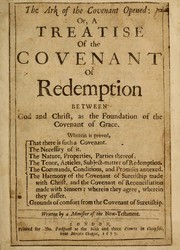
Signed, Sealed, Delivered: Patrick Gillespie’s The Ark of the Covenant Opened and the Eternal Bedrock of Your Peace

Have you ever had one of those days where your standing with God feels as shaky as a house of cards in a windstorm? For many of us, the spiritual life feels like an endless performance review. We wake up wondering if our “contract” with the Almighty is still valid or if a single bad day might trigger a cancellation clause. We treat grace like a fragile glass vase rather than the unshakeable rock it is intended to be.

In his classic work, The Ark of the Covenant Opened, 17th-century pastor Patrick Gillespie invites us to look behind the curtain of time into what theologians call the “Covenant of Redemption.” This isn’t just dry theory; it is the bedrock of our peace. Gillespie argues that our salvation isn’t a reaction to our choices, but the result of an eternal, iron-clad agreement between God the Father and God the Son.

As a pastor who holds to the Westminster Standards, I find Gillespie’s deep dive into this eternal arrangement to be exactly what our anxious age requires. Here are the most impactful takeaways from this massive treasury of truth.

The Foundation is Built on Christ’s Performance, Not Yours

Gillespie points out that the “Covenant of Grace” we enjoy today is like a beautiful skyscraper sitting on a foundation deep underground. He explains that this agreement “springs out of the Covenant made with Christ” before the world began. In this eternal pact, the Father and Son “plotted, consulted, and concluded” the business of our rescue long before we were even born.

This perspective shifts the focus from our fluctuating feelings to the steady, eternal will of God. Your security is settled because it rests on God’s deal with His Son, not on your ability to keep a promise.

“As the Covenant of Grace hath its rise from God only, and from Grace; so ’tis founded and bottomed upon nothing in us, but upon God’s Covenant with Christ.”

Jesus is a “Cautioner” Who Settles the Debt in Full

Gillespie uses a legal term that is incredibly powerful for a guilty conscience: the Surety, or “Cautioner.” Think of it as a co-signer on a loan you could never possibly repay. He explains that Jesus did not merely offer to help us pay our debt of sin; He legally stepped into our shoes in the courtroom of God. By becoming our Surety, Christ took on our “Law-place,” meaning your debt became His entire responsibility.

In divine justice, the Law cannot demand payment from both the Surety and the original debtor. Once Christ paid the price on the cross, the believer was legally cleared. Our debt isn’t just ignored; it is settled in full by a party who is “mighty to save.”

A Commissioned Ambassador, Not a Rogue Volunteer

One of Gillespie’s most insightful points is that Jesus did not “intrude” into the office of Savior on a whim. He was “called,” “designed,” and “sealed” for this specific task by the Father. Gillespie argues that this official commission gives the work of Jesus an unshakeable weight. Jesus is the “Messenger of the Covenant,” a high-level Ambassador sent with an official report from the Court of Heaven.

This matters because it proves the Father is just as invested in our rescue as the Son is. When we hear the Gospel, we aren’t hearing a sales pitch; we are receiving a formal report from a Messenger who was “fore-ordained before the foundation of the world.”

Even the Angels are Getting a Boost

In a surprising twist, Gillespie suggests that even the “good” Angels who never sinned benefit from Christ’s work. While they don’t need “redemption” from sin, they find their stability and “confirmation” in Christ.

This reminds us that Jesus is the center of the entire universe, not just a private “life coach” for humans. He is the “Head of all Principality and Power.” When we join the Covenant of Grace, we are joining a cosmic community where even the Angels look on with wonder, learning more about God’s wisdom through His dealings with us.

Christ is the Jewel, Not Just the Setting

Perhaps Gillespie’s most profound takeaway is the claim that Christ is called “the Covenant itself.” He is the summary and the “full price of the whole bargain.” Gillespie suggests that we often seek the benefits of the Covenant—like peace or pardon—while forgetting the Person who embodies them.

Christ is the “precious stone” in the ring, and all other blessings are merely the garnish. Because He is “all the Covenant,” having Christ means you have the entire contract, including every clause, every promise, and every future blessing.

“Christ is the jewel and precious stone of that ring; he himself is the chief thing that is in the Covenant.”


Why You Should Read This Book

In an era where everything feels temporary, Patrick Gillespie’s The Ark of the Covenant Opened provides an anchor that reaches back into eternity. This book is a masterclass in what theologians call “objective security.” It leads the reader out of the labyrinth of self-examination and into the sunlight of God’s settled purpose.

Gillespie helps the reader realize that they are not just a “saved sinner” trying to keep their head above water. Instead, they are a “Legatee”—someone who has been left a massive inheritance in a Will (the New Testament) that was signed in blood and proven in the highest court of the universe. Reading this book will help you stop treating your salvation like a trial period and start treating it like the settled legacy it is.

Final Thought to Ponder: If your salvation was a contract signed between the Father and the Son before time began, what possible mistake could you make today that is big enough to break it?

Christ’s Prayer Before His Passion by Anthony Burgess

Anthony Burgess’ Christ’s Prayer Before His Passion is an extensive and meticulous exposition of John 17, a chapter often referred to as the High Priestly Prayer. In this two-volume work, Burgess, a 17th-century Puritan minister, unpacks the depth and significance of Christ’s intercessory prayer with the precision and theological depth characteristic of Puritan exegesis. The sermons cover the entirety of John 17, focusing on the doctrinal, practical, and devotional aspects of the text, and are deeply rooted in the Puritan tradition, emphasizing the centrality of Christ’s mediatorial work.

The first volume of Burgess’ expository work primarily addresses the initial sections of John 17, where Christ prays for Himself and His glorification. Burgess methodically explains the significance of Christ’s requests, relating them to the larger framework of God’s redemptive plan. He delves into the nature of Christ’s glory, His relationship with the Father, and the implications of His finished work on the cross. The second volume shifts focus to Christ’s prayers for His disciples and the broader church, emphasizing the themes of unity, sanctification, and preservation in the truth. Burgess meticulously applies these themes to the life of the believer and the corporate life of the church, illustrating how Christ’s intercession is foundational for Christian life and practice.

Throughout these volumes, Burgess emphasizes the practical implications of Christ’s prayer, offering detailed applications for personal piety, church unity, and the believer’s relationship with the world. His expository method not only unpacks the theological richness of the text but also challenges readers to live in the light of Christ’s intercession. Burgess’ work is a blend of rigorous doctrinal teaching and heartfelt pastoral concern, in other words, a very typical curtain set of sermons, making it a valuable resource for both theological study and spiritual growth.

Burgess’ credentials as a theologian and pastor are evident in his writings, which are characterized by their depth of scriptural understanding and practical application. His ability to connect theological truths with everyday Christian living is a hallmark of his work, and Christ’s Prayer Before His Passion is no exception. As a member of the Westminster Assembly, Burgess’ insights into the nature of Christ’s mediatorial work are deeply informed by the Reformed tradition, making his expositions particularly valuable for those who hold to the Westminster Standards.

In conclusion, Christ’s Prayer Before His Passion by Anthony Burgess is a rich and invaluable resource for anyone seeking to understand the depths of Christ’s intercessory work. Burgess’ thorough exegesis, combined with his pastoral sensitivity, makes this two-volume set an essential tool for both pastors and laymen. Whether used for personal study, teaching, or devotional reading, this work offers timeless insights into one of the most significant passages in the New Testament.


“I received Christ’s Prayer Before His Passion by Reformation Heritage for the purpose of an unbiased review. I have not received any compensation for providing a positive review. My opinions are entirely my own and reflect my sincere evaluation of the book.”

Book Details:

  • Title: Christ’s Prayer Before His Passion: Expository Sermons on John 17
  • Author: Anthony Burgess
  • Publisher: Reformation Heritage Books

The Truth, Inspiration, and Authority of Scripture by Archibald Alexander

The Truth, Inspiration, and Authority of Scripture by Archibald Alexander, published by Lexham Press, is a profound exploration of the foundational doctrines concerning the nature of Scripture. Alexander, a leading figure in the Old Princeton Seminary, presents a detailed exposition on the reliability, divine inspiration, and authoritative role of the Bible in the life of the church and individual believers. The book is structured to provide a logical and theological defense of the Bible as the Word of God, capable of commanding belief and obedience.

In the opening sections, Alexander systematically addresses the truth of Scripture, arguing for its consistency and historical reliability. He counters skepticism by drawing on both internal and external evidences that affirm the Bible’s truthfulness. This is followed by a thorough treatment of the doctrine of inspiration, where Alexander elaborates on the Holy Spirit’s role in guiding the human authors of Scripture, ensuring that the Bible is both fully divine and genuinely human in its composition. The final section of the book discusses the authority of Scripture, emphasizing its sufficiency and finality as the rule of faith and life, undergirded by its divine origin.

Throughout the book, Alexander’s primary concern is to uphold the authority of the Bible against modernist critiques and to equip Christians with a robust understanding of why the Scriptures can be trusted as the ultimate source of divine revelation. He engages with various objections to biblical authority and inspiration, providing readers with well-reasoned responses that draw from historical, theological, and philosophical perspectives.

When comparing The Truth, Inspiration, and Authority of Scripture to other works on the same topic, such as B.B. Warfield’s The Inspiration and Authority of the Bible and John Murray’s The Infallible Word, Alexander’s work stands out for its foundational approach. Warfield and Murray, both of whom were influenced by Alexander, delve deeper into the nuances of biblical inspiration and inerrancy, often engaging with more complex theological and philosophical issues. In contrast, Alexander’s work provides a more accessible introduction to the topics, making it a valuable resource for those new to the study of Scripture’s nature.

While Warfield and Murray build upon the principles laid out by Alexander, they do so in a way that assumes a level of prior knowledge that Alexander himself provides. Thus, Alexander’s work serves as an excellent starting point for readers who wish to engage with the more detailed and technical discussions found in Warfield and Murray’s writings. Additionally, Alexander’s historical context allows him to address challenges to biblical authority that were emerging in his time, which continue to resonate in today’s debates over the nature of Scripture.

The content of The Truth, Inspiration, and Authority of Scripture is particularly useful for Christians seeking to deepen their understanding of why the Bible is central to their faith. Alexander’s logical and scriptural arguments equip readers with the tools necessary to defend the Bible’s divine origin and its role as the ultimate authority in matters of faith and practice. His clear exposition of the doctrine of inspiration helps believers appreciate the unique way in which God has communicated His will through human authors, ensuring that the Scriptures are both trustworthy and relevant.

The cover and binding of The Truth, Inspiration, and Authority of Scripture are well-suited to its content. The design is simple and elegant, reflecting the timeless nature of the book’s subject matter. The cover features a clean layout with a focus on clarity, which complements the book’s accessible writing style. The binding is durable, ensuring that the book can withstand repeated readings and study sessions. These features make the book a valuable addition to any personal or church library.

Overall, The Truth, Inspiration, and Authority of Scripture by Archibald Alexander is an essential resource for anyone seeking to understand and defend the Bible’s role in the Christian faith. Alexander’s clear and systematic approach, combined with his deep reverence for Scripture, makes this book a valuable tool for pastors, laymen, and scholars alike. Whether used for personal study, teaching, or group discussion, The Truth, Inspiration, and Authority of Scripture offers a comprehensive and accessible guide to one of the most important doctrines of the Christian faith.


“I received The Truth, Inspiration, and Authority of Scripture by Lexham Press for the purpose of an unbiased review. I have not received any compensation for providing a positive review. My opinions are entirely my own and reflect my sincere evaluation of the book.”

Book Details:

  • Title: The Truth, Inspiration, and Authority of Scripture
  • Author: Archibald Alexander
  • Publisher: Lexham Press

On Islam by Abraham Kuyper

On Islam by Abraham Kuyper, published by Lexham Press, is a work that offers a Christian perspective on Islam, providing readers with an analysis of Islamic theology, history, and its socio-political implications. Kuyper, a prominent Dutch theologian and politician, approaches Islam not merely as a distant religious system but as a significant global force that shapes the lives of millions. His examination is rooted in a Christian worldview, aiming to understand Islam in its own terms while also critiquing it through the lens of Reformed theology.

The book is divided into several sections, each dealing with different aspects of Islam. Kuyper begins with an exploration of Islamic theology, focusing on the central tenets of the faith such as the concept of Allah, the role of Muhammad as the final prophet, and the authority of the Qur’an. He then moves on to discuss the historical development of Islam, tracing its expansion from the Arabian Peninsula to various parts of the world. Kuyper is particularly interested in how Islamic beliefs have influenced the cultures and political structures of the regions where Islam has gained a foothold.

Kuyper’s work also addresses the challenges that Islam poses to Christianity and Western society. He engages with the ways in which Islamic law (Sharia) and worldview conflict with Christian doctrines and the principles of Western democracy. Throughout the book, Kuyper emphasizes the need for Christians to understand Islam deeply, not only to engage with Muslims but also to respond to the ideological and theological challenges that Islam presents.

Kuyper’s deep understanding of both Christian theology and the socio-political dynamics of his time positions him as a credible and insightful commentator on Islam. His background as a theologian is evident in his careful analysis of Islamic doctrine, while his experience as a politician informs his understanding of the broader implications of Islam in the global context. Kuyper’s ability to bridge the gap between theology and public life makes his work particularly valuable for readers who are interested in the intersection of faith and culture.

The content of On Islam is rich with insights that help readers understand the complexities of Islam and its place in the world. Kuyper’s approach is both analytical and practical, as he not only explains the core beliefs of Islam but also considers how these beliefs manifest in the lives of Muslims and the societies they inhabit. This makes the book particularly useful for Christians who seek to engage with Muslims thoughtfully and respectfully.

Kuyper’s use of the Bible is strategic and pointed. He frequently contrasts Islamic teachings with Christian doctrine, highlighting key differences such as the nature of God, the person and work of Jesus Christ, and the role of Scripture. For instance, Kuyper emphasizes the Christian understanding of God’s triune nature in contrast to the strict monotheism of Islam.

The cover and binding of On Islam are reflective of the book’s academic yet accessible nature. The design is simple and elegant, with a focus on clarity and readability. The cover features a subtle yet striking color scheme, which gives the book a professional appearance suitable for both personal libraries and academic settings. The binding is sturdy, ensuring that the book will hold up to repeated readings and study sessions.

When comparing On Islam to other Christian works on Islam, such as James R. White’s What Every Christian Needs to Know About the Qur’an and Nabeel Qureshi’s No God But One: Allah or Jesus?, Kuyper’s book stands out for its historical depth and theological rigor. While White and Qureshi provide valuable insights into the Qur’an and the differences between Islam and Christianity, Kuyper offers a more comprehensive view that includes not only theological analysis but also historical and cultural perspectives.

White’s work, for example, focuses primarily on a detailed examination of Islamic texts, aiming to equip Christians with knowledge about the Qur’an and its teachings. Qureshi, on the other hand, offers a personal narrative intertwined with theological reflection, providing a more accessible and emotionally engaging approach. Kuyper’s On Islam, in contrast, provides a broader scope that situates Islam within the larger context of world history and global politics, making it a valuable resource for those looking to understand the religion’s impact on a macro level.

Overall, On Islam by Abraham Kuyper is a valuable resource for Christians seeking to engage with Islam thoughtfully and biblically. Kuyper’s blend of theological analysis, historical insight, and practical application makes this book an excellent tool for pastors, laymen, and scholars alike.


“I received On Islam by Lexham Press for the purpose of an unbiased review. I have not received any compensation for providing a positive review. My opinions are entirely my own and reflect my sincere evaluation of the book.”

Book Details:

  • Title: On Islam
  • Author: Abraham Kuyper
  • Publisher: Lexham Press

Expository Outlines and Observations on Romans by Rob Ventura

Expository Outlines: Romans by Rob Ventura provides a comprehensive guide to one of the most significant books of the New Testament, the Epistle to the Romans. Ventura’s work is aimed at equipping pastors, teachers, and laypersons with a clear and structured approach to understanding and teaching this doctrinally rich letter. The book is organized into outlines that cover every chapter of Romans, offering a verse-by-verse breakdown that highlights key theological themes and practical applications.

Rob Ventura is a well-respected pastor and author known for his commitment to biblical exposition and Reformed theology. He serves as the pastor of Grace Community Baptist Church in Cumberland, Rhode Island, and has authored or co-authored several works aimed at helping Christians understand and apply Scripture. Ventura’s background in pastoral ministry and his deep knowledge of Reformed theology are evident throughout Expository Outlines: Romans, as he skillfully combines doctrinal depth with practical application.

The framework of Expository Outlines: Romans is designed to guide readers through the text in a logical and systematic way. Each outline is structured to highlight the main points of the passage, with a focus on how these points relate to the overall message of Romans. Ventura’s emphasis on application ensures that the outlines are not just academic exercises but are meant to be lived out in the life of the believer and the church..

Ventura begins by addressing the foundational doctrines presented in the opening chapters of Romans, such as the universality of sin, justification by faith, and the righteousness of God. He carefully traces Paul’s logical progression from the depravity of mankind to the glorious truth of salvation through Christ. Each outline is designed to help readers grasp the core message of the text while also providing practical insights for application in preaching and personal study.

As the book progresses, Ventura delves into the more complex theological discussions found in the latter chapters of Romans, such as sanctification, the relationship between Israel and the Church, and Christian ethics. Throughout the book, Ventura remains committed to presenting these deep theological truths in a manner that is accessible to a broad audience, making his work a valuable resource for anyone seeking to understand and teach the Epistle to the Romans.

Ventura’s previous works, including A Portrait of Paul: Identifying a True Minister of Christ and Spiritual Warfare: A Biblical and Balanced Perspective, have been well-received for their clarity and faithfulness to the biblical text. His expertise in expository preaching and teaching is particularly evident in Expository Outlines: Romans, where he provides a clear roadmap for those seeking to navigate the theological richness of Romans.

The content of Expository Outlines: Romans is carefully structured to help readers understand the key doctrines of Romans while also applying them to their lives. Ventura’s outlines are designed to highlight the main points of each chapter, making it easy for readers to follow Paul’s argument and see how the various theological concepts fit together. For example, in his outline of Romans 3:21-26, Ventura emphasizes the doctrine of justification by faith alone, explaining how this passage is central to understanding the gospel message.

Ventura’s use of the Bible is extensive and thorough. He consistently draws connections between Romans and other parts of Scripture, helping readers see the unity of the biblical message. This is particularly evident in his treatment of Romans 9-11, where he addresses the relationship between Israel and the Church. Ventura carefully navigates the complexities of this section, showing how Paul’s argument is rooted in the Old Testament and how it applies to the New Testament Church.

When comparing Expository Outlines: Romans to other works on Romans, such as John Stott’s The Message of Romans and Douglas Moo’s The Epistle to the Romans, Ventura’s book stands out for its practical approach to teaching and preaching. While Stott’s work is known for its accessibility and Moo’s commentary is celebrated for its scholarly depth, Ventura’s outlines offer a middle ground that is both theologically robust and practically oriented. Ventura’s focus on creating outlines makes his work particularly useful for pastors and teachers who need a structured approach to preparing sermons or Bible studies.

Unlike some of the more academic commentaries on Romans, Ventura’s book is not bogged down by technical jargon or extensive footnotes. Instead, it provides clear and concise outlines that can be easily adapted for various teaching contexts. This makes Expository Outlines: Romans an excellent complement to more detailed commentaries, offering a practical framework that can be expanded upon with insights from other works.

For pastors, Expository Outlines: Romans is an invaluable tool for sermon preparation. The outlines provide a clear structure that can be easily adapted into sermon series or Bible studies. Ventura’s insights into the text are not only doctrinally sound but also pastorally sensitive, making his outlines useful for addressing the needs of a congregation. The book’s practical focus ensures that pastors can preach through Romans with confidence, knowing that they are presenting the text in a way that is both faithful to Scripture and relevant to their listeners.

Laypersons will also find this book to be a helpful resource for personal study or leading small group discussions. The outlines are easy to follow and provide enough detail to facilitate a deeper understanding of Romans without being overwhelming. Ventura’s ability to distill complex theological concepts into clear, actionable points makes this book accessible to a broad audience, regardless of their level of theological training.

The cover and binding of Expository Outlines: Romans reflect the quality and practicality of the content within. The design is simple and understated, with a focus on functionality rather than aesthetic appeal. The book is well-bound and durable, ensuring that it can withstand regular use in both the study and the pulpit. The layout of the text is clear and easy to navigate, with each outline clearly delineated by headings and subheadings. This thoughtful design enhances the reader’s experience, allowing them to focus on the content without distraction.

Overall, Expository Outlines: Romans is a valuable resource for anyone seeking to understand and teach the Epistle to the Romans. Ventura’s clear and practical approach makes this book an excellent tool for pastors, teachers, and laypersons alike. Whether used for sermon preparation, personal study, or group discussion, this book provides a solid foundation for engaging with one of the most important books of the New Testament.


“I received Expository Outlines: Romans by Christian Focus for the purpose of an unbiased review. I have not received any compensation for providing a positive review. My opinions are entirely my own and reflect my sincere evaluation of the book.”

Book Details:

  • Title: Expository Outlines: Romans
  • Author: Rob Ventura
  • Publisher: Christian Focus

Spurgeon Commentary: Hebrews by Charles Spurgeon

The Spurgeon Commentary: Hebrews offers a unique and enriching exploration of the Epistle to the Hebrews through the lens of Charles Spurgeon’s sermons and writings. This volume provides readers with a wealth of insight into one of the New Testament’s most theologically dense books, combining Spurgeon’s profound understanding of Scripture with practical application. The commentary is organized around key passages from Hebrews, with Spurgeon’s thoughts and reflections offering clarity and depth to the often complex theological concepts presented in the epistle.

The book opens with an overview of the themes found in Hebrews, such as the supremacy of Christ, the new covenant, and the call to perseverance in the faith. Spurgeon’s expositions highlight the pastoral and doctrinal aspects of the text, emphasizing the importance of understanding Christ’s role as the ultimate High Priest and the fulfillment of Old Testament typology. Throughout the commentary, Spurgeon’s ability to connect the ancient text to the lives of his contemporaries is evident, making his insights still remarkably relevant for today’s readers.

In addition to the theological exposition, the Spurgeon Commentary: Hebrews includes practical applications and reflections that encourage readers to live out the truths of Scripture in their daily lives. Spurgeon’s emphasis on faith, endurance, and the assurance of salvation resonates through his commentary, offering readers both encouragement and challenge. The commentary is not merely an academic exercise but a call to a deeper, more committed walk with Christ.

Author’s Credentials

Charles Haddon Spurgeon (1834-1892), known as the “Prince of Preachers,” was a prominent English Baptist pastor whose influence extends far beyond his own denomination. His ministry at the Metropolitan Tabernacle in London was marked by powerful preaching, extensive evangelistic outreach, and a prolific writing career. Spurgeon’s sermons were widely published and have remained influential in Christian circles for over a century. Although Spurgeon was not a formal theologian in the academic sense, his deep biblical knowledge and pastoral insight have made his works enduring resources for understanding and applying Scripture.

Comparison to Similar Works

When comparing the Spurgeon Commentary: Hebrews to other commentaries on Hebrews, such as those by John Owen or F. F. Bruce, Spurgeon’s work stands out for its devotional quality and accessibility. John Owen’s Exposition of Hebrews is a monumental and exhaustive work that delves deeply into the theological and exegetical aspects of the text, but it can be challenging for the average reader due to its density and length. F. F. Bruce’s The Epistle to the Hebrews is a more modern scholarly commentary that offers detailed exegesis and historical background but lacks the pastoral warmth that characterizes Spurgeon’s approach.

Spurgeon’s commentary differs in that it is not a verse-by-verse exegesis but rather a thematic and pastoral reflection on the text. This makes it more accessible to lay readers and useful for devotional study, while still offering rich theological insights. For those seeking a balance between theological depth and practical application, Spurgeon’s work is a valuable resource that complements more technical commentaries.

Content and Application

The content of the Spurgeon Commentary: Hebrews helps readers understand the deep theological truths of Hebrews while applying them to their daily lives. Spurgeon’s reflections on passages such as Hebrews 4:14-16, where he expounds on Christ as our compassionate High Priest, provide comfort and encouragement to believers struggling with sin and doubt. His emphasis on the sufficiency of Christ’s atoning work and the security of the believer’s salvation is particularly helpful in reassuring readers of their standing before God.

The commentary’s use of the Bible is both extensive and thoughtful. Spurgeon consistently ties his reflections back to the biblical text, ensuring that his readers are not merely receiving his opinions but are being led back to Scripture itself. His ability to weave together multiple scriptural references to support his points enriches the reader’s understanding and shows the interconnectedness of biblical doctrine.

Practical Use by Pastors and Laymen

For pastors, the Spurgeon Commentary: Hebrews serves as an excellent resource for sermon preparation, offering illustrative material and pastoral insights that can be directly applied in preaching. Spurgeon’s ability to connect the text to the lives of his hearers makes his reflections particularly valuable for those looking to preach Hebrews in a way that resonates with their congregation.

Laymen will also find this commentary to be a valuable tool for personal study. Its accessibility makes it an excellent starting point for those who may find more scholarly commentaries intimidating. The practical applications provided by Spurgeon are clear and direct, making it easy for lay readers to apply the truths of Hebrews to their own lives.

Book Cover and Binding

The book’s cover and binding are well-crafted, reflecting the quality and importance of the content within. The design is both attractive and durable, ensuring that the book can withstand regular use. The layout of the text is reader-friendly, with clear headings and well-organized sections that make navigation easy. This practical design enhances the reader’s experience, allowing them to focus on the rich content without distraction.

Framework Analysis

The framework of the Spurgeon Commentary: Hebrews is organized thematically, which allows readers to engage with the text in a way that is both deep and practical. Each section of the commentary is designed to highlight the key theological points of the passage while also offering pastoral application. This structure ensures that readers are not only learning about the text but are also being challenged to apply its teachings to their lives and to the life of the church. Spurgeon’s emphasis on the centrality of Christ in the book of Hebrews serves as a constant reminder of the supremacy of Christ in all aspects of faith and practice.


“I received Spurgeon Commentary: Hebrews by Lexham Press for the purpose of an unbiased review. I have not received any compensation for providing a positive review. My opinions are entirely my own and reflect my sincere evaluation of the book.”

Book Details:

  • Title: Spurgeon Commentary: Hebrews
  • Author: Charles Spurgeon
  • Publisher: Lexham Press
« Older posts Newer posts »

© 2026 The Puritan Reader

Theme by Anders NorenUp ↑